Showing posts with label Democrats. Show all posts

Monday, December 18, 2023

Former NC Senatorial Candidate Cherie Beasley's Authenticity No Longer Compromised following Campaigning as a Black Woman


Originally published by The 19th

CAMBRIDGE, MASSACHUSETTS — The first thing I noticed was Cheri Beasley’s hair. When she greeted me on the Harvard University campus, it was in twists, set in a half-up, half down style that fell over the front of her tweed-style blue blazer.

The look was a departure from the straightened hair she wore during her 2022 U.S. Senate campaign in North Carolina. When I commented on the change, she smiled.

“It was really after the election that I thought I would try something new,” Beasley told me. “It's been refreshing. It's been renewing. It's been liberating.”

For Black women, hair has always been political. Natural Black styles in the form of braids, twists, locs and afros have long been disparaged as less professional than sleek, straight hair. In an interview during her book tour last year, former First Lady Michelle Obama said she made a conscious choice to keep her hair straightened while she was in the White House; the country, she said, was “not ready” for her natural Black hair. 

Beasley’s twists, and her role as a resident fellow with Harvard Kennedy School’s Institute of Politics this semester, signal a new stage for her political engagement after more than two decades as a judge and her Senate run. 
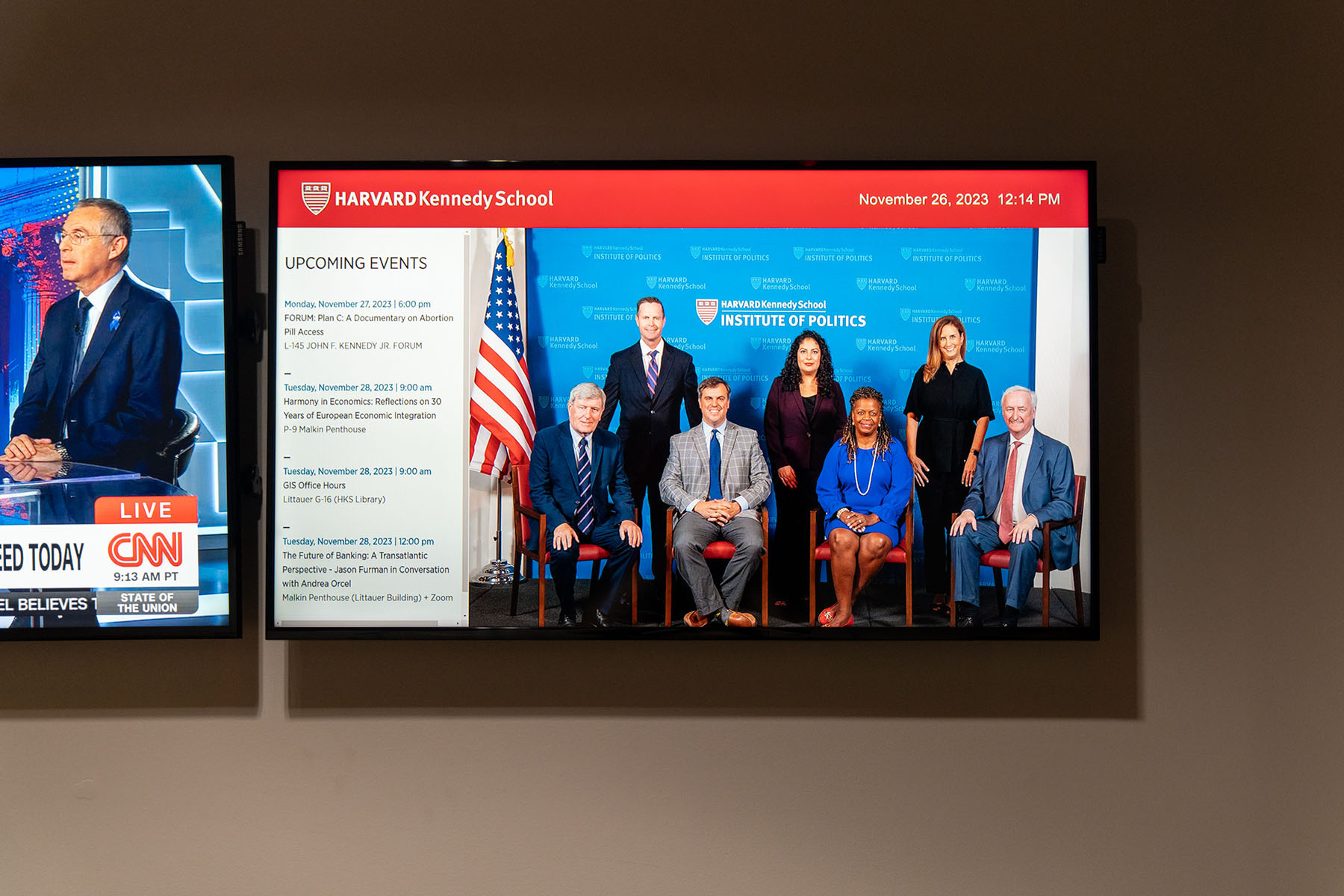
A portrait of Harvard Kennedy School's Fall 2023 Resident Fellows, including Cheri Beasley, is displayed on a television screen at the Institute of Politics, in Cambridge, Massachusetts.
A portrait of Harvard Kennedy School’s Fall 2023 Resident Fellows is displayed on a television screen at the Institute of Politics, in Cambridge, Massachusetts in November 2023. (Vanessa Leroy for The 19th)

The liberation she described showed in her relaxed body language and candid words as well. In October 2022, she told me she refused to “get caught up in the pettiness of partisan politics.” Now she’s ready to offer more frank assessments of the challenges and the promise of electoral politics for Black women. 

It was clear from our conversation that Beasley saw herself as much more than another candidate who lost an election. She was the first Black woman nominated by a major party for a U.S. Senate seat in North Carolina. She ran a competitive campaign as a Democrat. To her that is significant, not just personally, but for Black women candidates in the South and Black women generally. Organizers and academics who spoke with The 19th agreed. As advocates calling for more Black women in the U.S. Senate look to 2024 elections, Beasley’s campaign can serve as a powerful playbook.

“We really shouldn't look at it as a loss for the effort of Black women running and seeking higher office,” Beasley said. “I was a credible candidate, and every time we run and fight hard, we are moving the ball forward. That makes it easier for the next African-American woman to run and hopefully win.”


Last November, Beasley lost her bid for the open Senate seat in North Carolina to Republican Ted Budd by three points. Her loss, as well as that of former U.S. Rep. Val Demings, who challenged incumbent Republican Sen. Marco Rubio in Florida, temporarily dashed the hopes of people pushing for a Black woman to take a Senate seat. 

The 100-member Senate did not have a single Black woman for more than two years after Vice President Kamala Harris resigned to join the White House. That wouldn’t change until October, when Laphonza Butler became the only Black woman in the Senate. She was appointed to fill late Sen. Dianne Feinstein’s California seat.

Only three Black women in U.S. history have been U.S. senators. There has never been a Black woman governor. Securing these high-profile positions is a particular challenge for candidates who are often shut out of fundraising, networking and other opportunities more open to candidates who are White and men. 

The key concern for any political candidate is whether they can win. For Black women that pressure is more acute, academics and organizers told The 19th. They’re often at a financial disadvantage in big races, with less ability to self-fund and greater challenges raising money from donors. The Senate in particular has become a “millionaire’s club,” requiring spending an average of $16 million for a race, said Katherine Tate, a professor of political science at Brown University.
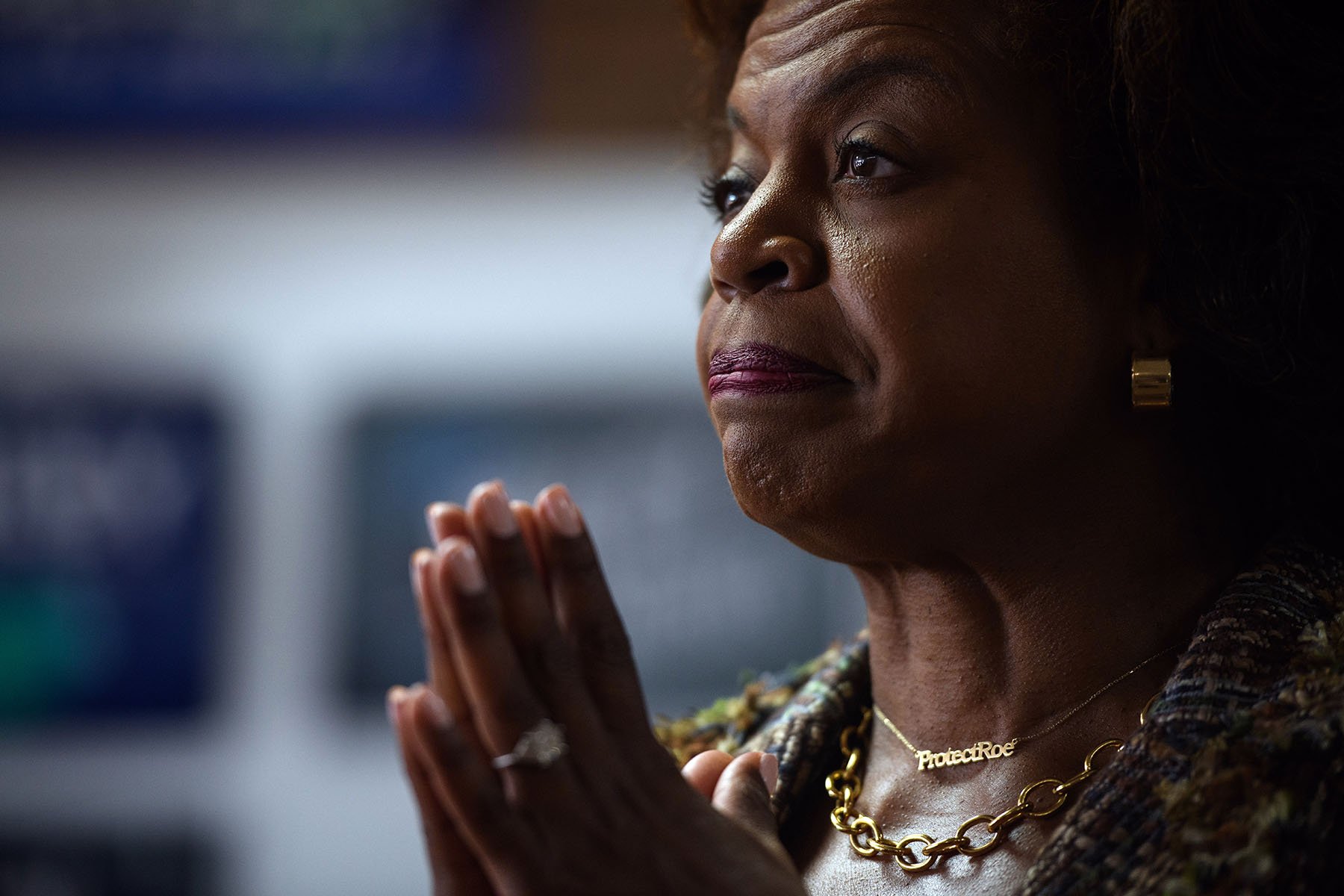
Cheri Beasley campaigns in Smithfield, North Carolina in October 2022.
Cheri Beasley campaigns in Smithfield, North Carolina in October 2022. (Melissa Sue Gerrits/Getty Images)

“Often these senators are independently wealthy, and so this prevents a lot of Black women from being considered suitable to run for these offices, because they just don't have that kind of wealth,” she said. “That’s a challenge when you want to integrate the highest levels of government."

Misconceptions about Black women also shape voters’ ability to connect with these candidates. They are often viewed as singularly focused on championing issues that affect Black people as opposed to the broader electorate, said Nadia Brown, a professor of government and director of women’s and gender studies at Georgetown University.

“That’s the rub: How can Black women appeal to these larger audiences outside of majority-minority districts?” Brown said. “What my research shows is that voters think about Black women as these kind of niche candidates or politicians who are great with dealing with issues that are at the nexus of race and gender, but they're not good on traditional ‘masculine’ issues like taxes or war, and things that are going on in the news right now.”

In North Carolina, Beasley had to deal with those factors, as well as the realities of running as a Democrat in a Republican-leaning state. She was tasked with not only energizing the urban Democratic base, but also connecting with rural, independent and conservative voters.

It’s a particularly challenging state, said Diane Robertson, a Democratic Party precinct chair for North Carrboro, North Carolina, who was a member of Beasley’s “kitchen cabinet” — the unofficial group of advisers for her Senate campaign.
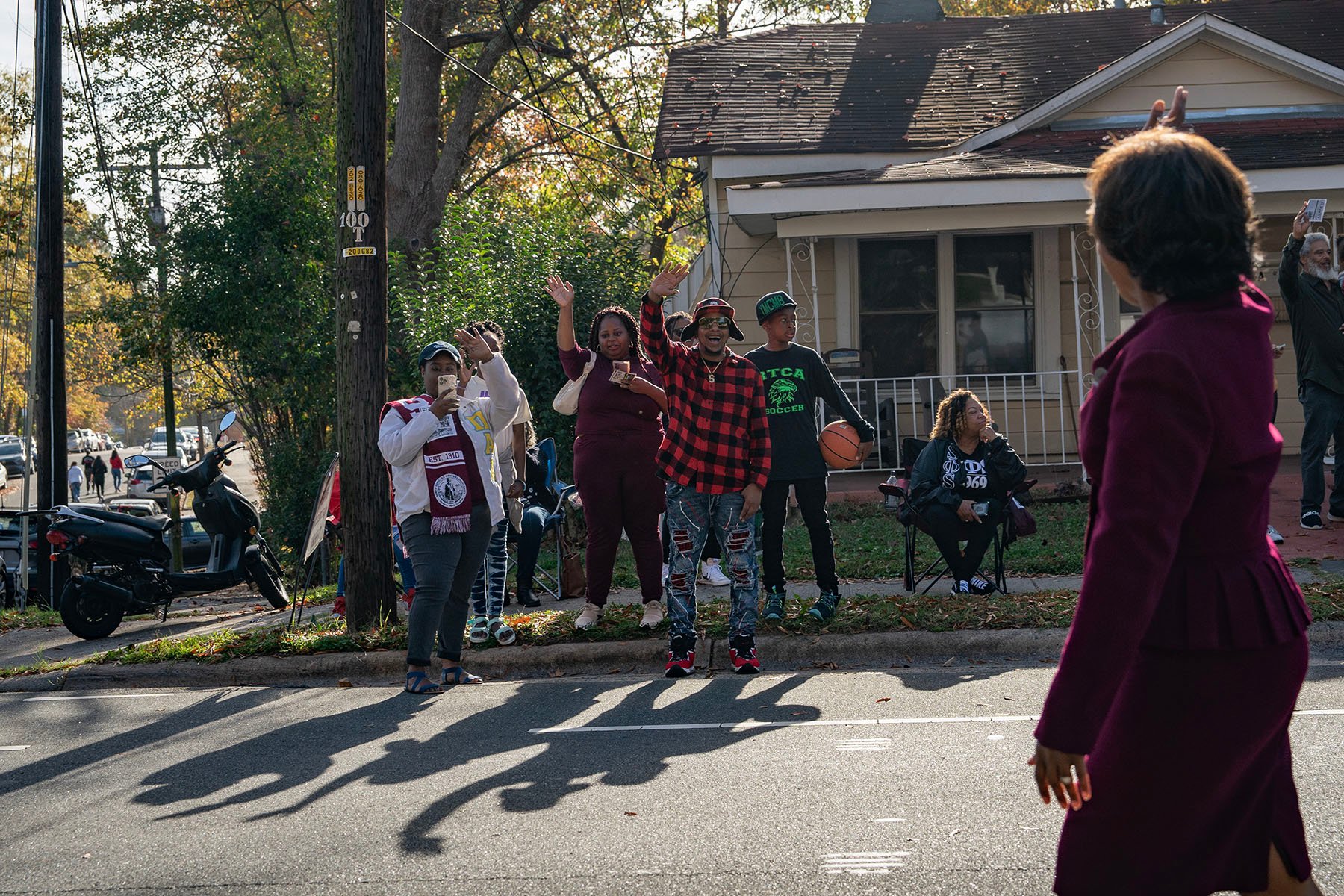
People cheer for Cheri Beasley as she walks in the North Carolina Central University Homecoming Parade.
People cheer for Cheri Beasley as she walks in the North Carolina Central University Homecoming Parade in November 2022 in Durham, North Carolina. (Allison Joyce/Getty Images)

While Black women tend to perform better in more diverse urban areas with a Democratic base, North Carolina has the second-largest rural population after Texas — 3.4 million people. Last year, unaffiliated voters became the largest voting bloc in the state.

This combination of factors means that candidates have to put in more work to travel to each of the state’s 100 counties, 80 of which are rural, to reach as many voters as possible, Robertson said. They also need to raise a lot of money for media exposure.

Black women have the additional burden of pitching themselves as someone who can represent a majority-White population that has few interactions, if any, with Black woman candidates.

Beasley took that challenge head on.

“I feel good about the fact that we had a lot of folks who shared our beliefs and understood that I was in this race to really fight hard for all of North Carolina, and for this country,” Beasley said. “It's an honor that people were gracious enough to support me; we received contributions from all 100 counties in the state. But of course, the loss was disappointing.”


Beasley adopted what one state senator referred to last year as a “North Carolina flavor” campaign.

She spent time in rural areas of the state and made an intentional effort to push for issues she believed rose above partisan identity, such as lowering health care costs, supporting small and rural towns, and expanding benefits for families, such as the child tax credit and paid family leave. Ultimately she outraised Budd by more than $20 million — a notable feat for a Black woman Democrat in a state that has only ever elected two women total (one of them a Democrat) as U.S. senators.

“Cheri, in my opinion, completely did her part,” said Stefanie Brown James, co-founder of The Collective PAC, which supports progressive Black political candidates. “What fell short was everybody else's contributions, and the Democratic infrastructure and ecosystem to be able to go toe-to-toe with the outside spending for her opponent and against her on the airwaves.”
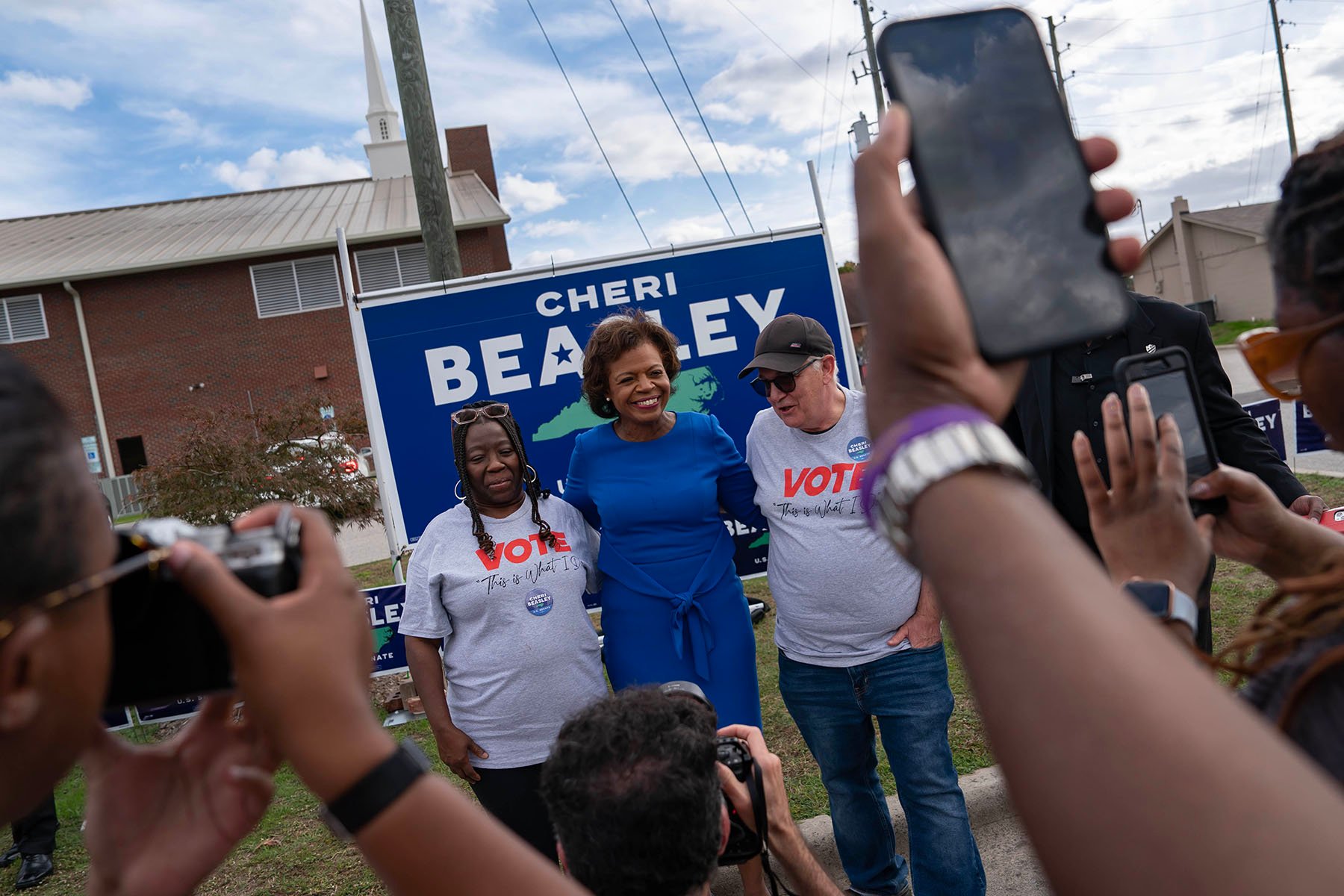
People take photos with Senate candidate Cheri Beasley at the Cumberland County Cookout and Canvass Launch event.
People take photos with Senate candidate Cheri Beasley at the Cumberland County Cookout and Canvass Launch event in Fayetteville, North Carolina in November 2022. (Allison Joyce/Getty Images)

National Democrats have been criticized by organizers and some election watchers for not giving Beasley’s race more attention and money. Beasley echoed this criticism. Local, state and national Democrats urged her to run, she said; national Democrats said they would invest in her race. But then their interest went elsewhere. 

“National Democrats' unwillingness to invest was a huge disappointment and, in significant part, led to my loss,” Beasley said in a follow-up email. “Promises to invest in my race were made by national Democrats which never materialized.”

As Beasley’s team moved forward, the messaging against her at times relied on racial biases or stereotypes.

Beasley recalled one political ad that questioned her record as a family court judge early in her career, implying that her decisions on the court were harmful to children.

Another ad targeted her time as chief justice of the North Carolina Supreme Court. The ad, titled "Failed Our Children," claimed that Beasley either released or threw out indictments for three people accused of sexual crimes involving children. North Carolina television stations ultimately pulled the ad after a Democrat-aligned legal group wrote letters to the stations calling the ad misleading.

“These groups that spend millions of dollars targeting me and other African-American women know exactly what they're doing when they do that,” Beasley said. “It's cruel and it's unfair to voters.”

Linking Black women to criminals — even child abusers — is a strategy used in other instances. In her confirmation hearings last year, now-Justice Ketanji Brown Jackson faced questions from Republican senators who repeated misleading claims about her sentencing record in several child sexual abuse cases.

“I think this portrayal is particularly hurtful because it goes back to the stereotypic trope about Black women not being good mothers,” Brown said. “They are seen as unfit to mother, they are seen as not nurturing, not caring.”

Beasley is aware of the collective hardships Black women candidates face — from the lack of robust financial investment to blatant racism. These difficulties keep some Black women from running for office altogether. Brown James and Brown both said there is little evidence that support for Black women candidates from the political establishment has improved since Beasley’s loss.
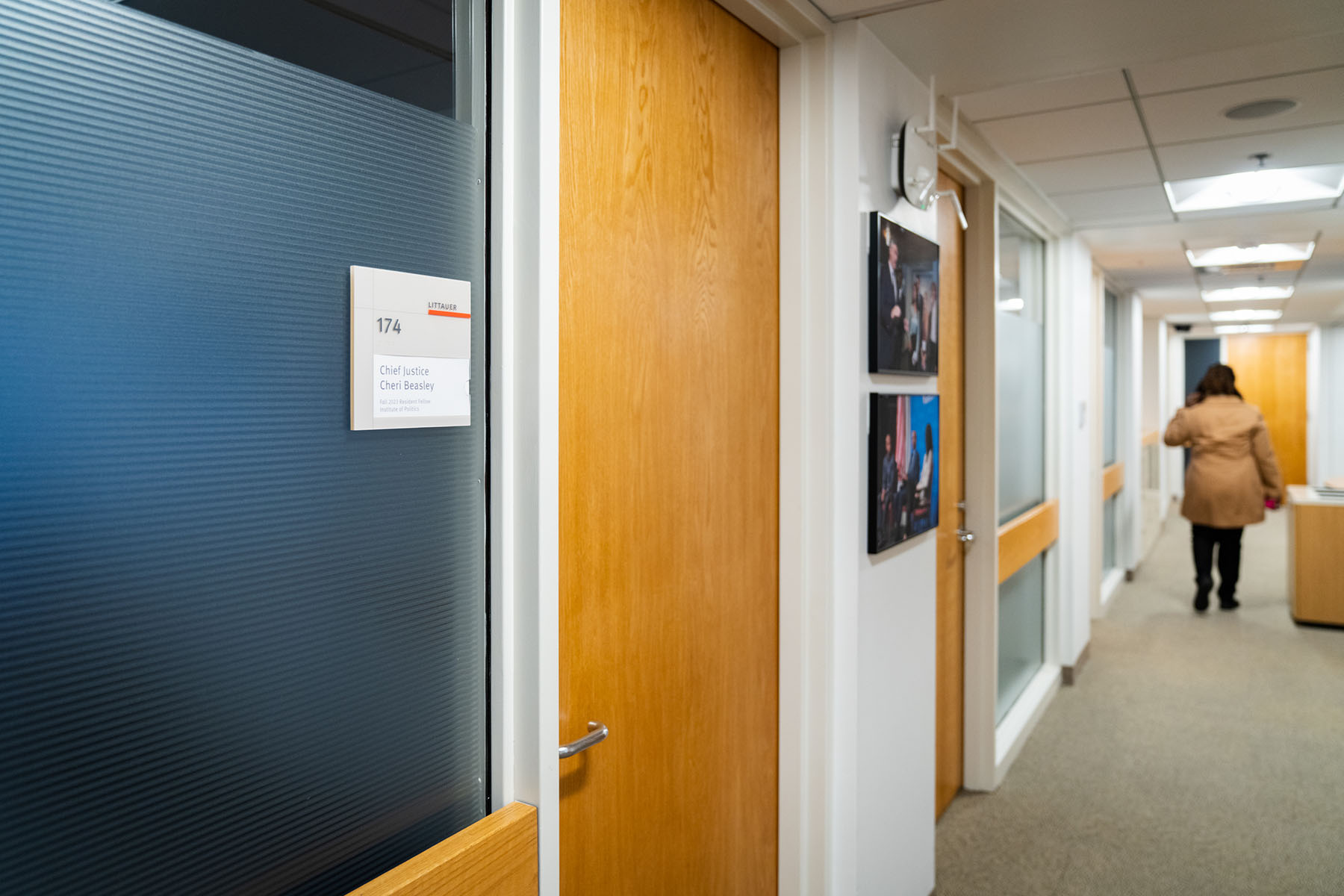
Cheri Beasley leaves her office at Harvard Kennedy School.
Cheri Beasley leaves her office at Harvard Kennedy School in Cambridge, Massachusetts in November 2023. (Vanessa Leroy for The 19th)

Despite the continued challenges, Beasley said she sees the positives of her campaign. She has demonstrated that Black women can be competitive candidates who can raise large amounts of money and connect with a wide sector of a state population. 

Other shifts in the political landscape are paving a way for more Black women in political positions. Over the last several years a growing number of Black women have run for elected office around the country. In certain areas, such as the suburbs, demographic changes in the electorate have fostered more voters who trust Black women candidates and their capabilities, Tate of Brown University said. Black women overall are proving more that they not only have what it takes to win over voters from different backgrounds but can gain the resources to run high-caliber campaigns. 

While Butler said she will not run to hold the seat she was appointed to, it’s likely the next Senate will have at least one Black woman. Rep. Lisa Blunt Rochester of Delaware is viewed as a favorite to win, and in Maryland, Prince George’s County Executive Angela Alsobrooks has endorsements from a number of high-ranking Democrats in the blue state. 

Beasley said it’s exciting to see the line-up of Black women for 2024, and she is hopeful there will continue to be advancements in this representation.

“It's monumental that I was the first African-American woman to be the Democratic nominee for the U.S. Senate in North Carolina,” Beasley said. “But I also know that it's important for us to figure out how to win these races. There's a wealth of opportunity.”

Monday, July 25, 2011

What About Raising Credit Scores of Working Class as Part of Debt Ceiling Debate

So let me get this right--poor, working, and middle class folk don't pay their bills or are slow paying, they are considered reckless and fiscally irresponsible credit risks therefore their credit scores drop and they aren't able to get any additional credit until they show six to 12 mos of timely payments or pay some thing off; US doesn't pay its bills, continue to show fiscal irresponsibility and the most viable option is to simply raise the debt ceiling. Wow! what a bargain if same strategy could "trickle down" to the masses.

I have an alternative solution to propose if some body could get it to the president and Congress for me that would be great:>) We the American people --those who are in the majority--you know the ones who actually make waaayyyyy less than $250,000/year. What if we give you the green light with our approval of raising the debt ceiling, forget about the issue that has gotten yall's panties in your craw--e.g. cutting the Big 3 (Medicaid, Medicare, and Social Security) and protecting the insanely wealthy by offering them more tax breaks. I propose that we keep every thing as is and simply raise every working class and poor person's credit score to 800 (leave all the rules in place in terms of what constitutes a good credit rating); forgive the outstanding mortgage payments of the working class families whom you apparently forgot to come back and bail out after you bailed out wall street--you know the folk on main street. The American people will have more disposable income again, access to credit (and possibly less people will be reliant on Medicaid and social security to make ends meet); restraints will be lifted in terms of making purchases and more money will start moving through out the system and not just aggregated at the top and true economic stimulus will occur. Then the US can pay its bills.

Wait, I am not finished. Since Boehner and the "Repugs" as my girlfriend calls them want to see cuts in the big three while protecting the top 2 percenters--let's still have this debate say starting back around January or February of2012 when the 2012 election cycle is in high gear. Then it will be in its appropriate sphere of discussion and debate. Don't try and dress it up now as if it is truly about demonstrating to the American people that we have fiscally responsible and astute members of Congress in office now--its too late!

Friday, April 8, 2011

WWDKD: What Would Dr. King Do If He Were Alive Today?

Monday, April 4 2011 marked the 43rd anniversary of the assassination of Reverend Dr. Martin Luther King Jr. Shot and killed at the age of 39 while standing on a balcony of the Lorraine Hotel in Memphis TN by the infamous James Earl Ray. Dr. King is most often venerated for being the spokesperson for the Montgomery bus boycott (1955), spearheading the Selma-to-Montgomery march (1965) and of course delivering his famous “I Have A Dream” speech on the steps of the Lincoln Memorial on August 28, 1963 at the historic March on Washington. There is a tendency, however, to keep Dr. King ‘s legacy nicely embalmed between 1955 and 1965 while paying very little attention to his stand against the Vietnam war, his conceptualization of the Poor People’s Campaign, and his support of labor rights and the sanitation workers in Memphis.
Dr. Cornell West describes most of the homage paid to Dr. King on his birth and death dates as “Santa Clausification” or the “sanitization.” In an interview with Tavis Smiley on PBS (January 12, 2007), Dr. West made this provocative statement:
“He [Dr. King] just becomes a nice little old man with a smile with toys in his bag, not a threat to anybody, as if his fundamental commitment to unconditional love and unarmed truth does not bring to bear certain kinds of pressure to a status quo. So the status quo feels so comfortable as though it's a convenient thing to do rather than acknowledge him as to what he was, what the FBI said, ‘The most dangerous man in America.’"
Professor James Cone, author of the book Martin & Malcolm & America articulated it this way:
"By making Dr. King’s birthday a national holiday, everybody claims him, even though they opposed him while he was alive. They have frozen King in 1963 with his 'I Have a Dream' speech. That is the one [speech] that can best be manipulated and misinterpreted.”
Towards the later years of his life, Dr. King’s world-wide public acclamation (remember he won the prestigious Nobel Peace Prize in 1964 at the age of 35)—had waned to public disdain and contempt. Even those whom Dr. King considered among some of his closest allies began to abandon him and publicly denounce his strategies in the fight for poor people and his stand against the Vietnam War.
I can’t help but wonder—what if Dr. King were alive today? Would his answers to poverty, war, and human rights be the same? Would he have become a political insider or an elitist or would he still stand hand in hand with the “common folk” and still be considered “one of the most dangerous men in America?”
On the issue of America’s involvement in Iran, Iraq, Afghanistan and Libya and our trigger-happy world leaders who are quick to go to war with very little regard for the innocent victims -- mostly the poor, women and children—I think Dr. King’s answer would be the same as he stated in his “Beyond Vietnam” speech:
“We still have a choice today: nonviolent coexistence or violent co-annihilation. We must find new ways to speak for peace and justice throughout the developing world, a world that borders on our doors. If we do not act, we shall surely be dragged down the long, dark, and shameful corridors of time reserved for those who possess power without compassion, might without morality, and strength without sight.”
On the issue of deepening poverty in the US which is now higher than it was in the 1960s when President Johnson declared a war on poverty, I think Dr. King would still say that it is a poverty of spirit that has led us back to this shameful place where many children and our elderly in America go to bed hungry amidst extravagant riches and often undeserved wealth (just ask the top 1 and 10%). Dr. King would probably refer back to a passage from his last book Where Do We Go From Here? Chaos or Community and reiterate:
“We must work passionately and indefatigably to bridge the gulf between our scientific progress and our moral progress. One of the greatest problems of mankind is that we suffer from a poverty of the spirit which stands in glaring contrast to our scientific and technological abundance. The richer we have become materially, the poorer we have become morally and spiritually.”
And to President Obama, while expressing how proud he is of his great accomplishments and showing that there is hope for his dream becoming a reality, he would also express some discontent and remind the President that his word is his bond to the people who elected him and that people are counting on him not to be the great friend maker on the play ground but a drum major for justice. He would probably remind President Obama that:
“The ultimate measure of a man is not where he stands in moments of comfort and convenience, but where he stands at times of challenge and controversy. The true neighbor will risk his position, his prestige, and even his life for the welfare of others.”

Tuesday, November 2, 2010

Election Day 2010 Prediction

It’s Election Day 2010 and the pundits have been buzzing predicting yet another “Republican takeover” similar to that in 1994 under the Newt Gingrich regime. I remember that year oh so well. I had just relocated to the Washington DC area and had the great fortune of landing a job as the campaign press secretary for Congressman Albert R. Wynn from Maryland’s 4th Congressional district. (I initially thought that I would go to DC and eventually work for North Carolina’s Congressman David Price (coincidentally the representative from NC’s 4th Congressional district) but he was a casualty of the Republicans. I earned my first battle scars as a campaign aide working for a US Congressman in a highly volatile political climate; the stakes were high and the Dems fought hard to hold on to their seats and to protect the party’s hero and “rock star” President Bill Clinton from becoming a lame duck.
When it was all said and done and the votes were all counted, 38.8% of the eligible American voters turned out. It was estimated that 108,000,000 eligible Americans failed to turn up at the polls and cast their vote. Lack of enthusiasm was again being blamed like it is today as the grim reaper after a bitter fight for guess what—health care reform. All in all, the Republicans garnered 19.0% of the eligible vote for Congress, exceeding the Democrats (16.6%) for the first time since 1946 (http://archive.fairvote.org/reports/1995/chp3/gans.html). And after the smoke cleared—34 incumbents, all Democrats lost their seats and the Republicans took control of Congress winning 52 seats in the House and 9 seats in the Senate. Needless to say the Democrats were sorely disappointed and shamed as the Republicans launched a massive far-reaching political war, “taking no prisoners.”

The speeches on the campaign trails and rhetoric during this election cycle were probably just as divisive and scary as they were in 1994 however I don’t recall them being nearly as sinister and hate-filled. I think that although President Obama’s level of intelligence and charismatic appeal is similar if not exceeds that of President Clinton, he has several forces working against him: (1) his race (Black man) although few people will openly admit it; (2) the miserable economy and the fact that we are in a recession that has flat lined as far as jobs recovery and growth goes; and (3) the matchless money machine of the right that is fueled by the spoils of Corporate warfare against the working class.

The pundits are predicting we are going to see a replay of 1994 even without a unified Republican Party and an clear republican agenda like the “Contract with America”—and despite the fact that the Republic party is splintered and broken into hostile factions –with the Tea Party on one side and ultra conservative old-guard Republican partiers on the other. They do however share in the enormous money coffers and have all seemed to rally behind one common battle cry—to politically disable and ultimately prevent the reelection in 2012 of President Obama. Case and point, current Senate Republican Leader Mitch McConnell sent out a rallying cry to the Republican Party admonishing them that their main goal is to “make sure that Barak Obama is a one-term president.”

The Democrats are not so much splintered as they are handicapped by out-dated political strategies and timid, if not spineless, leadership.

While it is 7:33 p.m. as I conclude this first posting on Election Day 2010 and most of the polls in the east have just closed, there is still much uncertainty. Nevertheless, the pundits on MSNBC and CNN are continuing to predict a Republican sweep. Part of their over confidence with their predictions may have served the Democrats well by forcing people to realize the high stakes of this election when they otherwise would have stayed at home.

I am going to take a gamble and predict that the Democrats will still hold on to the House and Senate although by a narrow margin. I am not as positive about the race between Elaine Marshall (Democratic candidate) and Richard Burr (incumbent Republican). My pessimism is largely due to the lack of support it appears that Elaine Marshall received by the NC Democratic Party. Furthermore I am ever so mindful of the fact that North Carolina didn't send the late former Senator Jessie Helms back to Washington over and over again on the votes of Republicans alone.

What is certain is that the nation as a whole is sickened by the lack of real political leadership by both parties and the abysmal lack of protection of everyday, hard working Americans. Both parties have failed to lead with courage, moral conviction and any sign of intelligent public policy making.

I predict that there will be some upsets but I am hopeful that the outcome will not be as dire or devastating as folk who are getting paid a lot more money that I make are prognosticating.

And the tallying of the votes has begun…let’s see if tomorrow we will have a Congress that is hell bent on taking our nation backwards or if we have a Congress that has a renewed commitment and stronger will to move us forward.